THE £40 BROWN BIN CHARGE
A LOOK BACK AT THE DECISION TO BRING IN A CHARGE FOR GARDEN WASTE IN DERBY UK.
FIRST WRITTEN AT THE TIME THE PROPOSAL WAS PUT IN PLACE BUT NOW INCLUDES UPDATES.
A LOOK BACK AT THE DECISION TO BRING IN A CHARGE FOR GARDEN WASTE IN DERBY UK.
FIRST WRITTEN AT THE TIME THE PROPOSAL WAS PUT IN PLACE BUT NOW INCLUDES UPDATES.
Derby told DEFRA they had in use
89,215 brown bins in 2012/13.
It isn’t clear if that includes homes
who had a 2nd brown bin.
Council accountants confirmed to me
that in 2012/13 19975.11 tonnes of waste was handled via the brown bin at a
cost of £49.13 per tonne – As confirmed by Russell Sexton at Derby City
Council.
This is a cost of £981,451.63 plus a
collection cost of a claimed £880,000 as confirmed by Malcolm Price at Derby
City Council via email giving a total of £1,861,451.63
If these figures are correct that
produces a cost per household in the last financial year to the council of
£20.86 for a full year including food waste which clearly isn’t £40 without
food waste for a part year.
If we presume there are 100,000 bins
as is often considered to be the case that becomes £18.61
That waste in general has to be
collected whatever bin lorry collects it – once in the RRS / SHANKS residual
waste contract that waste would cost at least £100 per tonne to handle – ie circa
£1,997,500 WITHOUT THE COLLECTION COST.
2015/16 costs were at least £107.40 per tonne and at a recent Full Council meeting it was quoted as £120.00 in 2016/17.
2015/16 costs were at least £107.40 per tonne and at a recent Full Council meeting it was quoted as £120.00 in 2016/17.
Documents show the council expected a
10% fall in recycling – based on the 2012/13 recycling rate of 45% will mean a plunge
from 48% in 2010/11 to 35% in the future.
The 2015/16 recycling rate for the city was actually 32.3%
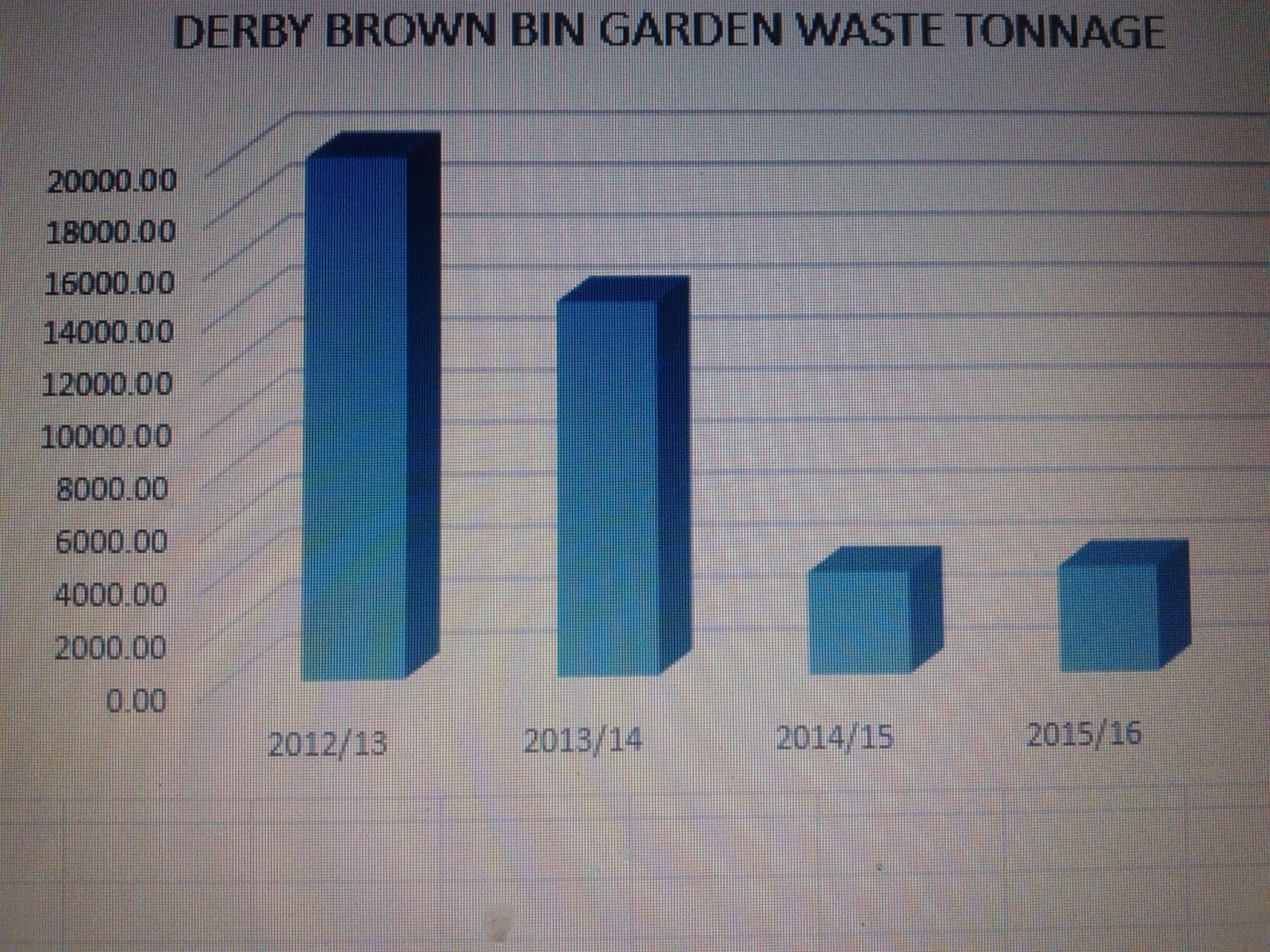
The image below shows the fall in garden waste composting via the brown bin - prior to the service termination this material included a percentage of food waste composted via the brown bin service.

The 2015/16 recycling rate for the city was actually 32.3%
The image below shows the fall in garden waste composting via the brown bin - prior to the service termination this material included a percentage of food waste composted via the brown bin service.
The documents sourced via FOI show a planned charge
of £20 per bin with £10 for the 2nd bin, this does not reflect the now applied
£40 and £20 for the 2nd bin charge.
The final options appraisal further
noted a charge of £20 and £10 noting this is relatively low compared to other
councils.
It notes that the city will FAIL to
reach the 2020 government target of recycling 50% of waste.
The council had planned to move
recycling to the black bin and residual waste to the small blue bin.
The council was aiming for a 20 - 30%
uptake in the chargeable garden waste collection.
A number of options were put forward
for waste management – it is suggested in the documents that option 6 be
selected
“Option 6 To adopt a citywide garden waste charging policy
based on 20% participation and implement a single bin comingled recycling
collection service using the black bin. We would also rollout a weekly residual
waste collection service using the smaller 140L blue bin
The blue bin supplied to residents has a capacity of 140 LTR which is
relatively small and does not have the capacity to contain all of the recycling
material currently presented at the kerbside. It is therefore proposed that the
blue bin is swapped over with the black bin. The black 240 LTR bin will be used
as the recycling bin and the blue bin will be used for the residual waste. A
weekly residual waste collection service will be rolled out citywide.
A charging policy for the collection of garden waste is
proposed which may prove unpopular with customers; however 30% of Local
Authorities already charge with others coming on stream.
Recommendation
"Taking the four major factors into consideration it is recommended that Option 6 is introduced.”
The reality is NO considered option matches what has finally taken place
as
option 6 is not what actually happened.
The reality was that while the brown bin itself stayed the same, new larger blue bins were issued and small blue bins were removed. Dry recycling stayed in the blue bin and residual waste in the black bin.
option 6 is not what actually happened.
The reality was that while the brown bin itself stayed the same, new larger blue bins were issued and small blue bins were removed. Dry recycling stayed in the blue bin and residual waste in the black bin.
FOI data showing a cost break down suddenly shows a £40 plus £20 charge
for bin number 2 or more.
No FOI papers show why this figure changed from the planned £20 and £10 charge.
No FOI papers show why this figure changed from the planned £20 and £10 charge.
The council in the FOI data consider that 20,000 residents would sign up
for the £40 charge with 1 in 4 of those agreeing to pay a further £20 for a 2nd
bin.
CONCLUSION
It is quite clear that garden and food waste was being processed
far cheaper than the charge proposed and later applied and the vastly higher rate if it moves as it has done to the black bin residual route. The charge is shown in council
papers to be lower than that now applied. Large volumes of waste will now be
diverted from recycling and composting driving down the cities recycling rate
and diverting waste to landfill and incineration and will likely be fly tipped.
They have managed to select a waste option that was not even in the options
considered.
THERE IS SOMETHING ROTTEN AND IT IS NOT JUST WHAT IS PUT IN THE BROWN BIN!
©SIMON BACON 2017
